


Optischer Faserziehturm: Prozesssteuerungs- und Messsysteme
FINDE ES HERAUS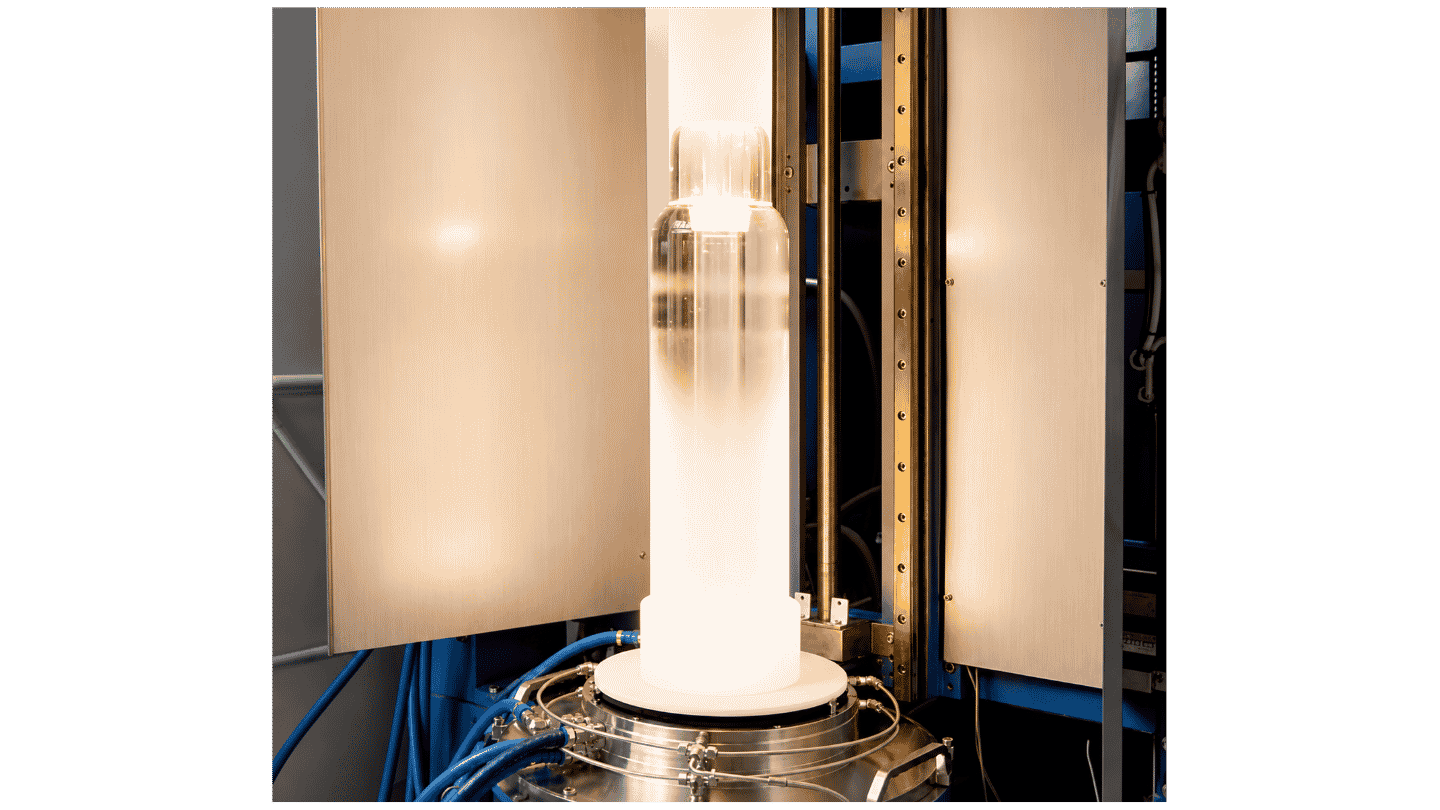
Die Herstellung von Glasfasern erfordert hochpräzise gesteuerte Ziehprozesse, um eine gleichbleibende Produktqualität und -leistung zu gewährleisten. Um die steigende Nachfrage nach Glasfasern für Telekommunikation und Datenübertragung zu decken, haben Hersteller weltweit hocheffiziente Produktionsanlagen entwickelt. Obwohl die Glasfaserherstellung branchenweit im Allgemeinen ähnlich ist, erfordert die Erzielung einer gleichbleibenden Faserqualität und langfristigen Leistungsfähigkeit eine präzise Prozesssteuerung und zuverlässige Messsysteme.
Woraus besteht ein Faserziehturm?
Optische Fasern werden aus einem großen, mehrschichtigen Glaszylinder, dem sogenannten Vorformling, hergestellt. Dieser Vorformling wird senkrecht oben in einem Ziehturm positioniert und dort erhitzt, bis das Glas weich wird und sich zu einer dünnen Faser formt.
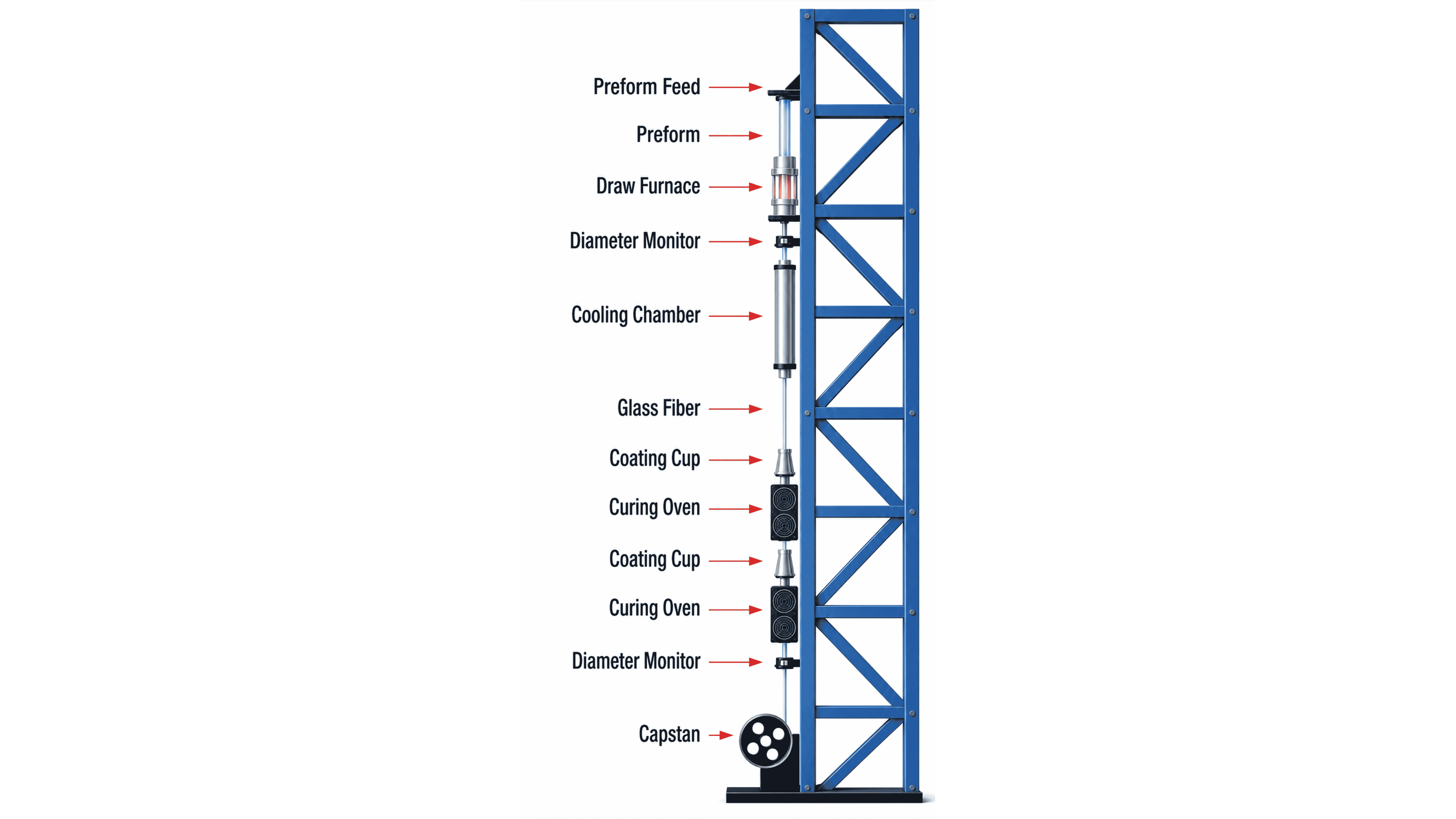
Moderne Faserziehtürme sind typischerweise zwischen 30 und 45 Meter hoch und umfassen mehrere Stufen zur Steuerung des Herstellungsprozesses. Ein Ofen erhitzt die Vorformlinge, ein Kühlsystem stabilisiert die Fasertemperatur, Beschichtungsanlagen schützen die Faseroberfläche und Aushärtungssysteme gewährleisten die Unversehrtheit der Beschichtung, bevor die Faser die Aufwickel- und Spindelanlage erreicht.
Heute nutzen viele Hersteller Hochleistungs-UV-LED-Härtungssysteme, um die Energieeffizienz zu verbessern und den Platzbedarf in der Produktionslinie zu reduzieren.
Steuerung des Zeichnungsprozesses
Eine präzise Prozesssteuerung ist unerlässlich, um stabile Produktionsbedingungen und eine gleichbleibende Faserqualität zu gewährleisten. Im gesamten Ziehturm überwachen Messsysteme kontinuierlich die wichtigsten Produktionsparameter und liefern Daten zur Prozessoptimierung und Qualitätssicherung.
Wichtige Messparameter in einem Faserziehturm
Während der Faserproduktion müssen verschiedene Parameter kontinuierlich überwacht werden, darunter der Durchmesser der unbeschichteten und der beschichteten Fasern sowie deren Spannung und Ausrichtung. Präzise Messsysteme helfen den Herstellern, stabile Produktionsbedingungen aufrechtzuerhalten und eine gleichbleibende Faserqualität zu gewährleisten.
Die entlang des Förderturms installierten Messsysteme werden üblicherweise für folgende Zwecke verwendet:
• Messung des Durchmessers der blanken Faser
• Messung des Durchmessers beschichteter Fasern
• Faserpositions- und Ausrichtungskontrolle
• Faserspannungsüberwachung
• Erkennung interner Defekte in den Glas- und Beschichtungsschichten
• Erkennung von Klumpen- und Verengungsdefekten an der endgültig beschichteten Faser
Die von diesen Systemen erfassten Informationen werden zur Echtzeitüberwachung, Prozessanpassung und Qualitätsanalyse an Produktionssteuerungssysteme übermittelt.
Die Rolle von Messsystemen in Faserziehtürmen
• Sicherstellung eines stabilen Faserdurchmessers während der gesamten Produktion
• Prozessabweichungen in Echtzeit erkennen
• Verbesserung der Faserqualität und Produktkonformität
• Produktionsausfälle und Stillstandszeiten reduzieren
• Unterstützung der Herstellung von Hochgeschwindigkeits-Glasfasern
Da die Faserproduktion kontinuierlich und oft rund um die Uhr das ganze Jahr über läuft, müssen Messsysteme hohe Zuverlässigkeit, hohe Genauigkeit und hohe Geschwindigkeit vereinen. Bei Produktionsgeschwindigkeiten von typischerweise 3.000 m/min und angestrebten 5.000 m/min sind diese Eigenschaften unerlässlich, um die Produktqualität trotz stetig steigender Liniengeschwindigkeiten zu gewährleisten.
Erfahren Sie mehr über unsere LISG-Systeme zur Messung des optischen Faserdurchmessers
Entdecken Sie unsere NCTM-Lösungen zur Messung der optischen Faserspannung
Entdecken Sie unsere faseroptischen Mess- und Steuerungslösungen
Kontaktieren Sie unser Team, um die beste Messlösung für Ihre Faserziehturm-Anwendung zu finden
Unsere Artikel zum Thema
.jpg)
Kontaktieren Sie die Firma CERSA MCI
Haben Sie einen spezifischen Kontroll- und Messbedarf?
Sie sind auf der Suche nach einem leistungsstarken Steuergerät?
Sie möchten eine unserer Dienstleistungen anfordern?


